


Headache Treatment
In Mississauga
Understanding Headaches
Headaches are one of the most common health concerns people experience. For some, they come and go occasionally. For others, they can become frequent, intense, and disruptive to everyday life. Headaches can affect work, sleep, exercise, concentration, mood, and overall quality of life.
Not all headaches feel the same. Some cause a dull pressure, while others create throbbing pain, tightness, facial pressure, nausea, or sensitivity to light and sound. Because headaches can have different causes, understanding the type of headache and what may be contributing to it is an important first step toward finding the right treatment.
Common Types of Headaches
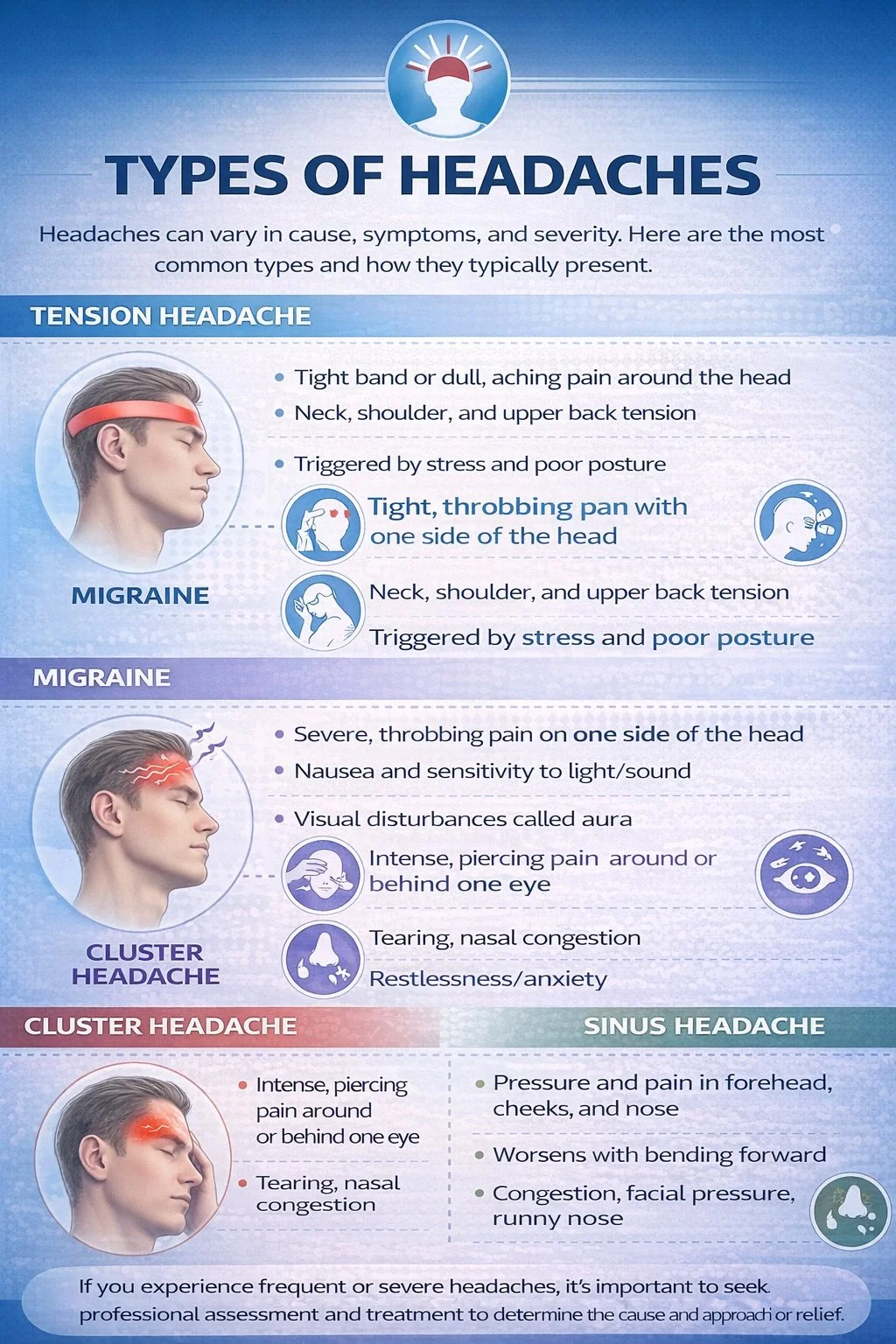
Tension Headaches
Tension headaches are the most common type. They are often described as a steady, aching pressure or tight band around the head. Many people also notice tension in the neck, shoulders, and upper back.
These headaches are often linked to stress, poor posture, prolonged computer use, muscle tightness, jaw tension, and neck stiffness. They may build gradually and can last from a short period of time to several hours.
Migraines
Migraines are usually more intense and can have a much greater impact on daily life. Migraine pain is often throbbing or pulsating and may occur on one side of the head or both. They are commonly associated with symptoms such as nausea, vomiting, sensitivity to light, sensitivity to sound, blurred vision, or visual aura.
Migraine triggers vary from person to person and may include stress, poor sleep, dehydration, hormonal changes, skipped meals, certain foods, and physical tension in the neck and shoulders.
Cervicogenic Headaches
Some headaches actually begin in the neck. These are known as cervicogenic headaches. They are often caused by joint restriction, muscle tension, or irritation in the neck and upper back. Pain may start at the base of the skull and travel toward the forehead, temple, or behind the eye.
People with cervicogenic headaches often also report neck pain, stiffness, or reduced range of motion.
Sinus Headaches
Sinus headaches are usually associated with sinus inflammation or infection. They often cause pressure around the forehead, cheeks, eyes, or nose and may feel worse when bending forward. These headaches may also come with congestion, facial tenderness, and a runny nose.
What Can Contribute to Headaches?
Headaches can develop for many reasons, and often more than one factor is involved. Common contributing factors include:
poor posture
neck and upper back tension
stress
muscle tightness
spinal joint irritation
prolonged sitting or screen time
dehydration
lack of sleep
jaw clenching or teeth grinding
previous injuries such as whiplash
reduced mobility in the neck and shoulder
When the muscles, joints, and soft tissues of the neck and upper back are not functioning well, they can place extra strain on the body and contribute to recurring headaches.
The Link Between the Neck, Muscles, and Headaches
Many headaches are closely connected to what is happening in the neck, shoulders, and upper back. Tight muscles, poor posture, restricted joints, and irritation in the cervical spine can all refer pain into the head.
This is common in people who spend long hours at a desk, drive frequently, use their phones often, or carry tension in their shoulders and neck. In these cases, simply masking the pain may not be enough. Addressing the underlying physical contributors may be an important part of longer-term relief.
Treatment Options for Headaches
Treatment depends on the type of headache, its severity, and the factors contributing to it. Conservative care often focuses on reducing pain, improving mobility, relieving muscle tension, and addressing the root causes of recurring symptoms.
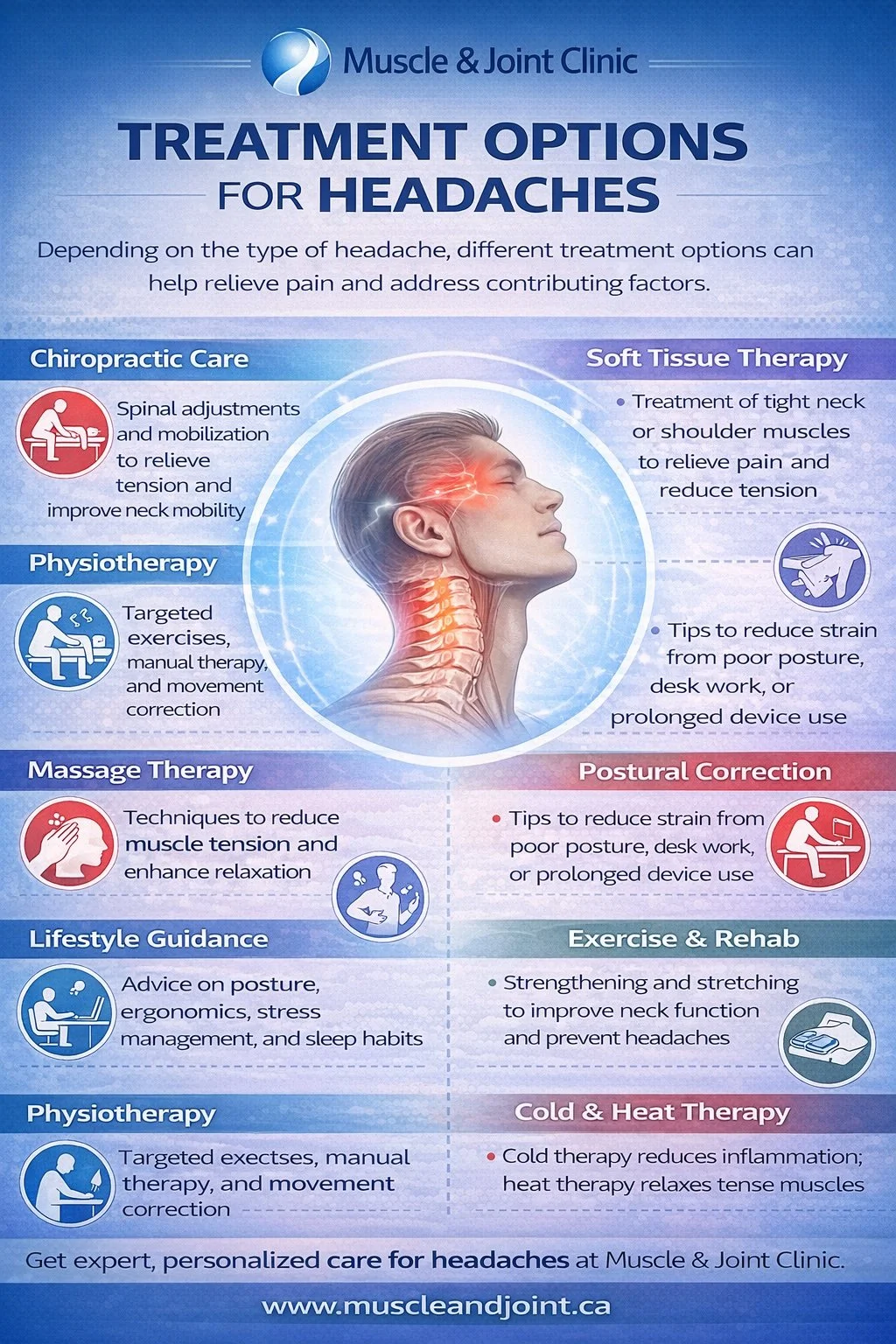
At our clinic, treatment may include a combination of chiropractic care, physiotherapy, and massage therapy depending on your needs.
Chiropractic Care
Chiropractic care focuses on the spine, joints, muscles, and nervous system. For headaches related to neck stiffness, postural strain, tension, or joint dysfunction, chiropractic treatment may help improve movement and reduce irritation in the neck and upper back.
Treatment may include joint mobilization, spinal manipulation when appropriate, soft tissue techniques, postural guidance, and exercises to improve function and reduce strain.
Physiotherapy
Physiotherapy can help identify movement problems, muscle imbalances, weakness, and mechanical issues contributing to headaches. A physiotherapist may use hands-on treatment, stretching, mobility work, strengthening exercises, and rehabilitation strategies to improve how the neck, shoulders, and upper back function.
This can be especially helpful for people with recurring headaches related to posture, past injuries, work demands, or muscle imbalance.
Massage Therapy
Massage therapy can be very effective for relieving tight muscles and reducing tension that may be contributing to headaches. It can help relax the muscles of the neck, shoulders, jaw, and upper back, improve circulation, and reduce stress-related tension patterns.
For people who carry a lot of muscle tightness or experience tension headaches, massage therapy can be an important part of care.
Why a Team Approach Can Help
Headaches are not always caused by one single issue, which is why a team-based approach can be so valuable. Some people may benefit most from improving spinal and joint movement. Others may need to focus on muscle tension, posture, strengthening, or rehabilitation. Many benefit from a combination of treatments.
By offering chiropractic care, physiotherapy, and massage therapy, our clinic can provide a more complete approach to headache treatment. This allows care to be tailored to your symptoms, your body, and your recovery goals.
When to Seek Help
You should consider an assessment if your headaches:
happen frequently
are becoming more intense
are associated with neck pain or stiffness
interfere with work, sleep, or daily activities
keep returning despite rest or medication
seem to be triggered by posture, stress, or muscle tension
A proper assessment can help determine what may be contributing to your headaches and what type of treatment may be most appropriate.
How We Can Help
At Muscle & Joint Clinic, we take a personalized approach to headache care. Our team of chiropractors, physiotherapists, and massage therapists works together to help identify the physical factors that may be contributing to your symptoms. Whether your headaches are related to neck tension, posture, stress, muscle tightness, or movement restrictions, we can create a treatment plan designed to reduce pain, improve mobility, and support long-term relief.
If headaches have been affecting your daily life, we are here to help you get to the root of the problem and start moving toward feeling better.