


Mississauga Clinic
Treating Torticollis
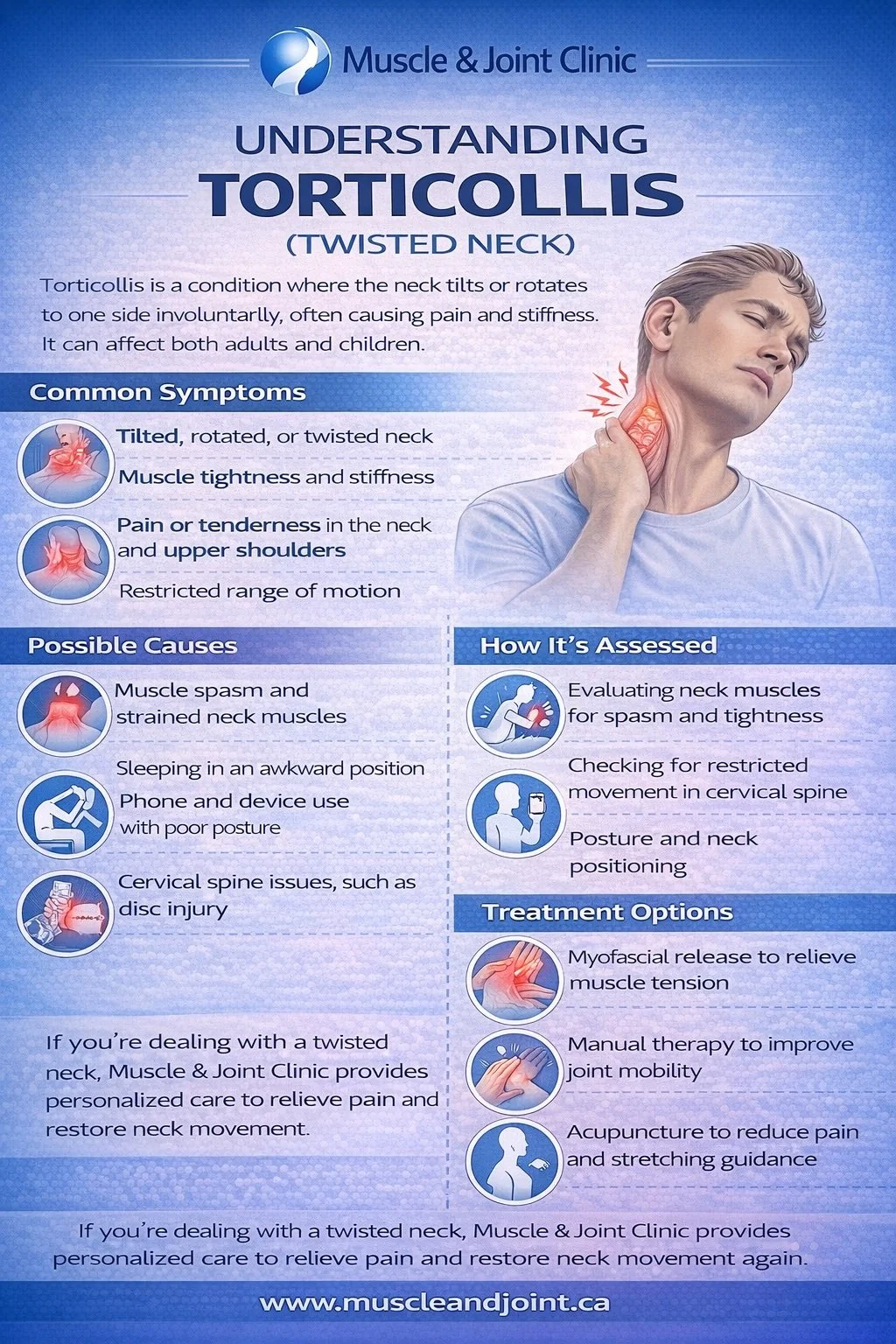
What Is Torticollis?
Torticollis, sometimes referred to as a “twisted neck,” is a condition in which the head becomes tilted, rotated, or pulled to one side due to tightness, spasm, or dysfunction in the muscles and joints of the neck. It often causes noticeable neck pain, stiffness, and difficulty turning or moving the head normally.
Torticollis can affect both children and adults, and the severity can vary from mild discomfort to significant pain and restricted movement. In many cases, it comes on suddenly and may make simple daily activities such as driving, sleeping, working, or looking over the shoulder difficult and uncomfortable.
One of the most common forms is transient spasmodic torticollis, which usually develops when the neck muscles go into spasm due to strain, irritation, or prolonged poor positioning. This type is often temporary and may last for a short period of time, though in some individuals it can persist longer and require treatment.
Common Causes of Torticollis
Torticollis can develop for a number of reasons. In some people, it is triggered by everyday habits or awkward positioning, while in others there may be an underlying injury, irritation, or medical cause contributing to the problem.
Common causes and contributing factors may include:
sleeping in an awkward position that strains the neck
holding the phone between the shoulder and ear for long periods
poor posture during desk work or device use
sudden neck movements or overuse
muscular strain or inflammation in the neck
cervical joint irritation or restriction
cervical spine injuries, including disc irritation or herniation
muscle spasm following a fall, accident, or other trauma
less commonly, infection or other neurological involvement
Because torticollis can have different causes, a proper assessment is important to determine what structures may be involved and what type of treatment is most appropriate.
Common Symptoms of Torticollis
Torticollis usually causes both pain and limited movement. Symptoms can appear suddenly or develop over time, depending on the cause.
Common symptoms may include:
neck pain or discomfort
muscle spasm or tightness on one side of the neck
the head being tilted or rotated to one side
difficulty turning the head normally
stiffness in the neck and upper shoulders
pain with movement
tenderness in the neck muscles
reduced range of motion
headaches or pain extending into the upper back or shoulder
For some people, the pain is localized to the neck. For others, the tightness and spasm may also create tension into the shoulders, upper back, or head.
How Torticollis Is Assessed
At our clinic, we assess torticollis by looking at how the muscles, joints, and movement of the neck are functioning. The goal is to identify the source of the pain and restriction so treatment can be tailored to the individual.
During an assessment, we may look for:
muscle spasm or myofascial tightness in the neck
tenderness in the levator scapulae, scalenes, splenius, and trapezius muscles
joint restrictions in the cervical spine
limited range of motion in turning, bending, or extending the neck
postural strain or movement imbalances
signs of irritation involving surrounding tissues
This type of hands-on evaluation helps determine whether the condition is primarily muscular, joint-related, posture-related, or linked to another contributing factor.
Treatment for Torticollis
Treatment for torticollis is focused on reducing muscle spasm, relieving pain, restoring mobility, and helping the neck return to more normal movement. The right treatment plan will depend on the cause, severity, and duration of symptoms.
At our clinic, treatment options may include:
Myofascial Trigger Point Therapy
This treatment targets tight, irritated areas within the muscles that may be contributing to pain and restricted movement. Releasing these trigger points can help reduce tension and improve comfort.
Electrotherapy and Ultrasound
These modalities may be used to help reduce pain, calm muscle spasm, and support tissue healing, depending on the individual presentation.
Friction Massage Therapy
Massage-based techniques can help improve circulation, reduce soft tissue tension, and decrease muscle guarding in the affected area.
Acupuncture
Acupuncture may be used to help reduce pain, relax tight muscles, and support recovery in patients experiencing ongoing spasm and discomfort.
Manual Therapy and Mobility Work
Hands-on treatment may also be used to address joint restrictions in the neck and improve range of motion where appropriate.
Stretching and Exercise Guidance
Specific stretches and movement strategies may be recommended to help improve flexibility, restore function, and reduce the chance of symptoms returning.
Why Early Treatment Matters
When torticollis is left untreated, the ongoing muscle spasm and reduced neck movement can begin to affect day-to-day function. Simple activities such as driving, sleeping comfortably, working at a desk, or even turning to speak with someone can become difficult.
Early treatment may help reduce pain sooner, improve mobility more quickly, and prevent the problem from becoming more persistent or recurring.
How We Can Help
At Muscle & Joint Clinic, we provide personalized care for neck pain and conditions such as torticollis. Our team works to identify the muscles, joints, and movement issues contributing to your symptoms so that treatment can be targeted to the root of the problem. Whether your torticollis is related to muscle spasm, posture, strain, or irritation in the cervical spine, we can help reduce pain, improve movement, and support your recovery.
If you are experiencing a stiff, painful, or twisted neck, our clinic is here to help you get moving comfortably again.