


Mississauga Clinic
Treating Whiplash And Car Injuries

Whiplash Treatment in Mississauga
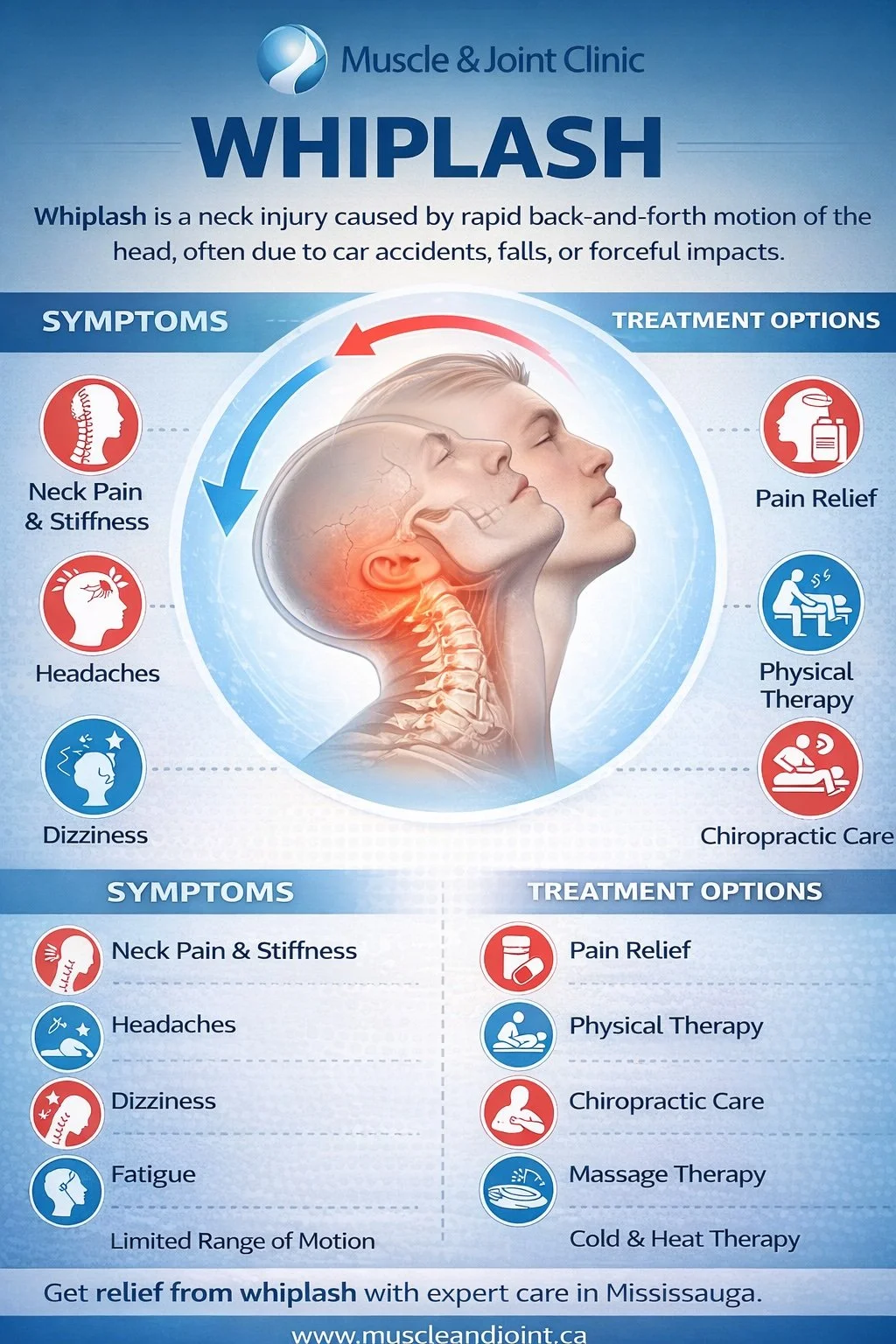
Whiplash is a neck injury that happens when the head is suddenly forced backward and then forward, or vice versa. It commonly occurs during car accidents, falls, or other forms of physical trauma. Whiplash can lead to a range of symptoms, including neck pain, headaches, dizziness, stiffness, and fatigue.
Symptoms of Whiplash
Whiplash can affect people in different ways, and symptoms may appear immediately or develop over the hours and days following an injury. While neck pain is one of the most common complaints, whiplash can also affect movement, balance, energy levels, and overall daily function.
Common symptoms of whiplash include:
Neck pain and stiffness: Neck pain is the most common symptom of whiplash. It can range from mild discomfort to more severe pain and is often accompanied by stiffness, tenderness, and difficulty moving the neck.
Headaches: Many people experience headaches after a whiplash injury, especially at the base of the skull or across the forehead. These headaches may be related to tension, joint irritation, or muscle strain in the neck and upper shoulders.
Dizziness or vertigo: Some individuals may feel lightheaded, unsteady, or dizzy after a whiplash injury. In some cases, this may also be accompanied by a sense of imbalance or motion sensitivity.
Fatigue: Whiplash can place significant stress on the body, which may leave people feeling unusually tired or drained. Fatigue can make it more difficult to focus, work, exercise, or manage everyday responsibilities.
Reduced range of motion: A whiplash injury can make it difficult to turn, bend, or rotate the head normally. Simple activities such as driving, working at a desk, or looking over the shoulder may become uncomfortable.
Other possible symptoms: Depending on the severity of the injury, some people may also experience shoulder or upper back pain, tingling or numbness in the arms or hands, blurred vision, ringing in the ears, jaw discomfort, or increased sensitivity to movement.
How Whiplash Is Diagnosed
Diagnosing whiplash usually begins with a detailed assessment of the injury and the symptoms being experienced. A healthcare provider will review the patient’s medical history, ask how the injury occurred, and perform a physical examination to evaluate pain levels, mobility, muscle tension, and joint function.
During the examination, attention is often given to the neck, upper back, shoulders, and surrounding soft tissues to determine how the injury is affecting movement and function. In some cases, the provider may also assess posture, neurological symptoms, and overall mobility.
Imaging tests: X-rays, CT scans, or MRI imaging may sometimes be recommended to rule out fractures, more serious structural injuries, or other conditions contributing to the symptoms. These tests are not always necessary, but they can be helpful in certain cases, especially when symptoms are severe, persistent, or unusual.
Treatment for Whiplash
Treatment for whiplash is typically conservative and focused on reducing pain, restoring mobility, and supporting the body’s natural healing process. Early care is often important, as leaving symptoms untreated may contribute to ongoing discomfort and reduced function.
Depending on the individual case, treatment may include:
Pain relief strategies: Over-the-counter medications such as acetaminophen or anti-inflammatory medications may be recommended to help manage pain and inflammation, when appropriate.
Physical therapy: Physiotherapy can help improve range of motion, reduce stiffness, strengthen supporting muscles, and guide a safe return to normal activity.
Chiropractic care: Chiropractic treatment can play an important role in whiplash recovery by addressing joint restriction, muscle tension, and movement dysfunction. Treatment may include manual therapy, mobilization, soft tissue techniques, and guided exercises.
Massage therapy: Massage therapy may help relieve muscle tension, reduce discomfort, improve circulation, and promote relaxation during recovery.
Exercise and rehabilitation: Targeted exercises are often recommended to improve flexibility, restore neck function, and support longer-term healing. A customized rehab plan can help patients recover more safely and effectively.
Cold and heat therapy: Ice may be used during the early stages to help reduce pain and inflammation, while heat may later be used to relax tight muscles and improve comfort.
The Role of Chiropractic Care in Whiplash Recovery
Chiropractors are trained to assess and treat musculoskeletal conditions, including injuries affecting the neck, spine, muscles, and joints. In cases of whiplash, chiropractic care can help identify areas of restriction, tension, and dysfunction that may be contributing to pain and limited movement.
A chiropractor may use a combination of hands-on treatment, soft tissue therapy, mobility work, postural advice, and corrective exercises to support recovery. The goal is not only to reduce pain, but also to improve function, restore movement, and help prevent longer-term complications.
At our Mississauga clinic, treatment plans are tailored to each individual based on their symptoms, injury history, and recovery goals. Because no two whiplash injuries are exactly the same, personalized care is an important part of achieving the best outcome.
Get Help for Whiplash in Mississauga
Whiplash is a common injury, especially after motor vehicle accidents, falls, or sudden impacts, and it can lead to a wide range of symptoms including neck pain, headaches, dizziness, fatigue, and reduced mobility. The good news is that with the right assessment and treatment plan, many people can recover well and return to their normal activities.
If you have recently experienced a whiplash injury, seeking care early can make a meaningful difference in your recovery. Our team in Mississauga offers personalized treatment options to help reduce pain, restore movement, and support healing every step of the way.